


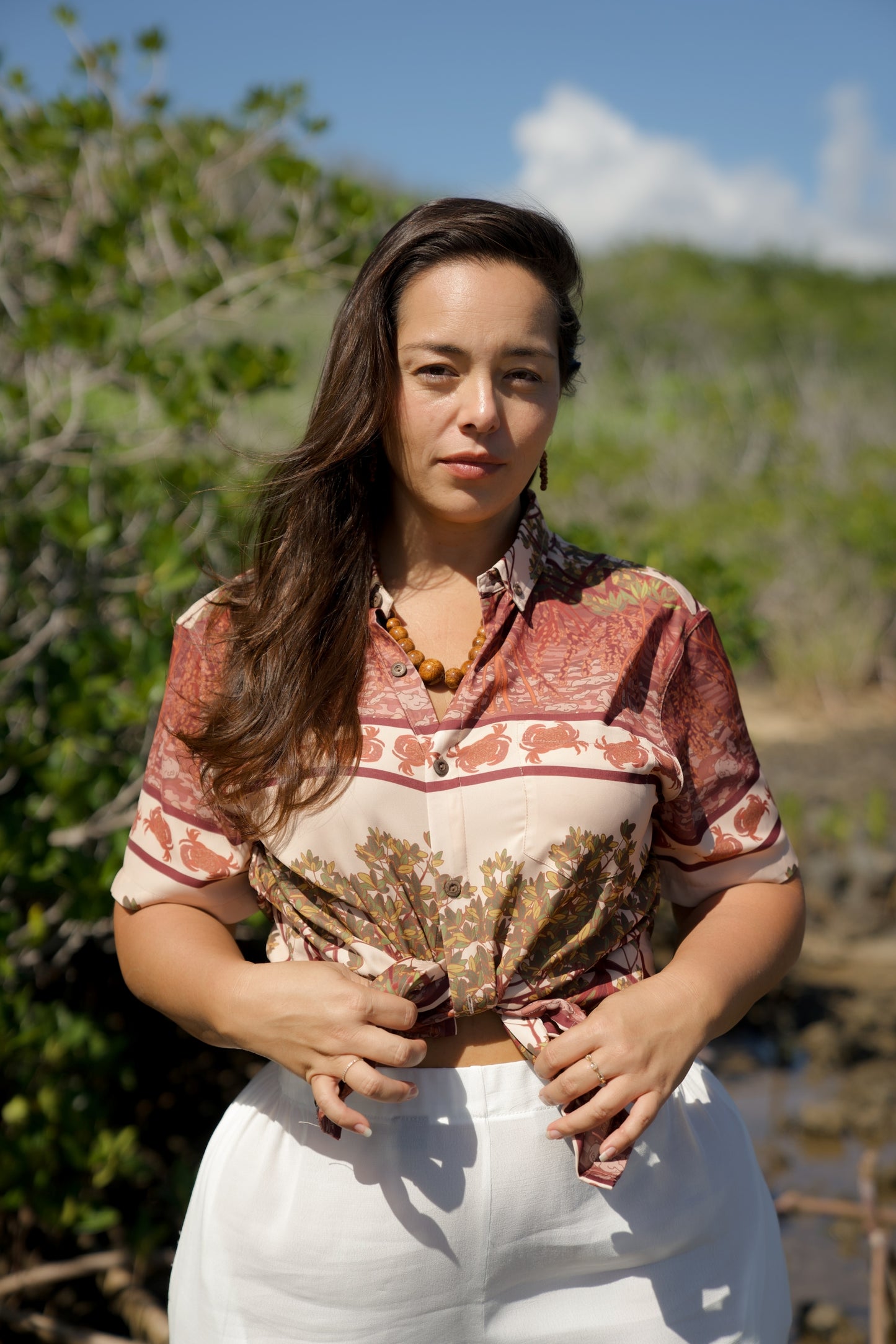
The two resilient species illustrated in this print are well adapted to the ebbs and flows of salty intertidal life. Mangroves with their tangle of prop roots, protect shorelines, shelter wildlife, and filter water while crabs’ adaptive behaviors and tough armor allow them to tolerate harsh environmental conditions and changing water levels.
Mangrove forests safeguard coastal human communities. In this print, the dense prop root system of the red mangrove (Rhizophora mangle) stabilizes shorelines, prevents erosion and buffers against storm surges and hurricanes. Mangroves provide critical habitat for a wide variety of wildlife, including fish, birds, crabs, and oysters. The roots act as nurseries for young fish and for many other marine species. Mangroves also improve water quality by filtering pollutants and trapping sediments, ensuring cleaner coastal waters.
The flatback mud crab (Eurypanopeus depressus) in this print exhibits significant resilience to stress. This species has adapted to survive in the intertidal zone by burrowing into mud or seeking shelter in the roots of mangroves and oysters, which provide protection from the constant ebb and flow of the tide. Their ability to tolerate periods of low tide, salty conditions, and high tide submersion allows the crab to thrive in challenging living conditions.
This print was created to honor the research and legacies of two beloved professors and mentors of mine at Florida Gulf Coast University: Dr. Win Everham, a professor of Ecology and Environmental Studies whose life work focuses on how ecosystems respond to disturbances such as hurricanes and the late Dr. Takashi Ueda, a professor of Molecular Biology and Biotechnology whose life work focused on the stress tolerance mechanisms of plants and animals.
- David Shepard: artist, conservationist, and fashion designer

